Rewilding Olienhout
Wild Creative’s First International Rewilding Collaboration
Across the world, wild places are disappearing. Ecosystems are becoming fragmented, biodiversity is declining, and many landscapes no longer resemble the thriving environments they once were. Yet in the face of this global loss, there are people choosing to restore instead of extract — people proving that rewilding is not only possible, but transformative.
This December, Wild Creative will travel to South Africa to participate in and document one of those stories.
Wild Creative has been invited by Kukama Wildlife College and the Olienhout Game Preserve to help tell the story of their rewilding journey — their dream, their sacrifices, their mission, and the incredible success they have already achieved restoring biodiversity to former cattle land.
This will become Wild Creative’s very first international rewilding collaboration project.
The Story of Olienhout
What was once heavily altered cattle land is slowly being restored back into functioning wild habitat through carefully planned and scientifically guided conservation work. Species have already begun returning to Olienhout, and the preserve continues working toward rebuilding a balanced ecosystem capable of supporting wildlife once again.
One of the most ambitious goals of the project is helping return the white rhino to land where it has not stepped foot in over 100 years.
To make that dream possible, major infrastructure and conservation support are still needed — including specialized electric fencing, anti-poaching protection, transport, veterinary care, habitat preparation, and long-term support for the rhinos themselves.
Rewilding is not simply about bringing animals back. It is about restoring ecological relationships, biodiversity, resilience, and humanity’s connection to the natural world.
Especially across Africa, where wildlife populations continue facing pressure from habitat fragmentation, poaching, overdevelopment, and human expansion, rewilding efforts like Olienhout are critically important. These projects protect not only iconic wildlife species, but entire ecosystems that sustain countless forms of life.
Olienhout represents something deeply hopeful:
proof that damaged landscapes can recover.
Why Wild Creative Was Invited
The owners of Olienhout and Kukama Wildlife College, Nikki and Christiaan, reached out directly to Wild Creative asking for help sharing their story with the world.
Like so many conservationists working quietly behind the scenes, they have sacrificed enormously in pursuit of restoring biodiversity and creating a future where wildlife and wild landscapes can thrive once again.
Their work deserves to be seen.
Wild Creative’s mission has always centered around using storytelling, creativity, science communication, and immersive experiences to inspire conservation action. Through photography, filmmaking, writing, citizen science, and creative collaboration, we aim to help bridge the gap between the public and the natural world.
This project represents exactly why Wild Creative was created.
More Than A Trip
While this will undoubtedly be a once-in-a-lifetime experience for attendees, this is not an African safari vacation.
This is a conservation-driven expedition with purpose.
Wild Creative participants will become part of Kukama’s very first volunteer program, helping document what it is truly like to volunteer on an active rewilding project in South Africa. Participants will assist with conservation storytelling, species documentation, citizen science efforts, media creation, educational outreach, and boots-on-the-ground support for the initiative.
Our goal is not simply to witness the story — but to help tell it in a way that inspires action around the world.
We want every donor, supporter, and follower to feel like they are there with us.
What We’ll Create
Throughout the expedition, Wild Creative participants will create:
Wildlife and conservation photography
Short-form and long-form video content
Cinematic documentary footage
A mini-documentary film
Drone imagery and aerial documentation
Articles and written reports
Poetry and creative writing
Paintings and artistic interpretations
Social media campaigns and educational outreach
Species documentation and citizen science data
These are crucial tools that help organizations like Olienhout and Kukama continue operating, educating, fundraising, and expanding their conservation impact.
Storytelling has the power to create global awareness, inspire future volunteers, attract support, influence policy, and ultimately help conservation projects survive.
Why Rewilding Matters
Around the world, many people feel overwhelmed by the scale of environmental destruction and biodiversity loss. Rewilding offers something incredibly important:
hope.
It reminds us that restoration is possible.
That ecosystems can heal.
That species can return.
That humans can choose to become caretakers rather than destroyers.
Projects like Olienhout are not just local conservation stories — they are examples for the rest of the world. They prove that degraded land can become wild again through dedication, science, sacrifice, and community support.
And now, Wild Creative has the opportunity to help share that message globally.
Join The Mission
Our initial fundraising goal will help cover travel and logistical costs for a 10-person Wild Creative conservation storytelling team traveling to South Africa.
Any additional funds raised beyond expedition costs will directly support rewilding initiatives at Olienhout and help contribute toward the return of the white rhino.
By supporting this project, you are not only helping fund conservation storytelling — you are helping amplify one of the most hopeful rewilding stories in modern conservation.
Together, we can help bring the world into the story of Olienhout.
Together, we can help inspire a more rewilded planet.
OUR FUNDRAISING GOAL: $22,500
We believe in asking our community to support this work—but we also believe those of us going to South Africa should personally invest in making it happen.
The estimated total cost of the Wild Creative South Africa Rewilding Project is approximately $30,000.
Wild Creative's fundraising campaign will seek to cover 75% of that cost, while our participating team members will collectively contribute the remaining 25% themselves.
$30,000 TOTAL PROJECT BUDGET
75% — $22,500 Community Fundraising
Our public fundraising goal. These donations will help cover the costs required to send our Wild Creative team to South Africa and carry out the project.
25% — $7,500 Participant Contributions
Our team isn't asking others to carry the entire cost. Collectively, participants will contribute approximately $7,500 toward making the project possible.
For a full 10-person team, that represents an average personal commitment of approximately $750 per participant.
WHERE THE MONEY GOES
Our current estimated project expenses include:
International Airfare — ~$25,000
Approximately $2,500 per participant for round-trip airfare from the United States.
Kukama Wildlife College — ~$3,220
Six days for 10 participants, including accommodations, meals, and conservation programming.
Johannesburg ↔ Project Transportation — ~$1,600
Round-trip ground transportation for our team.
Estimated Project Total — ~$29,820
WHAT HAPPENS WHEN WE EXCEED OUR GOAL?
The impact stays in South Africa.
Every dollar raised beyond what Wild Creative actually needs to complete the project will be designated for our Rhino Fund.
At the completion of the project, these funds will be gifted to Kukama to support their goal of returning rhino to this landscape.
And there's another important part:
Every dollar our participants personally contribute beyond the planned 25% means another dollar from our fundraising can remain in South Africa.
Our $22,500 goal helps us get there.
Anything we don't need to get there helps bring the rhino home.
EVERY CONTRIBUTION MATTERS
To help visualize the impact of donations, we’ve created a sliding scale showing how different contribution amounts help support meals, accommodations, airfare, and ultimately the broader rewilding mission at Olienhout.
Please do not feel discouraged if your donation only covers a small percentage of an individual expense. Meaningful conservation work is often made possible by many people collectively giving what they can. Small contributions add up to real impact, and community-driven support is exactly how change happens.
Whether you give $10 or $1,000, you are becoming part of a global effort to restore biodiversity, support conservation storytelling, and help bring white rhinos back to land they have not walked on in over a century.
SPONSOR A WILD CREATIVE FELLOW
Businesses, organizations, foundations, and individuals can also choose to directly support a member of the Wild Creative team through a sponsored scholarship or fellowship.
Sponsors may fund all or a portion of an individual's project expenses, helping remove financial barriers for a photographer, filmmaker, artist, scientist, naturalist, writer, or other creative to participate in this work.
Full fellowships may also be recognized in the sponsor's name—for example, the "[Sponsor Name] Rewilding Fellowship"—creating a direct connection between the sponsor and the conservation storyteller their support helps put in the field.
Fellowship support can help cover airfare, ground transportation, accommodations, meals, and participation in the six-day rewilding project.
Organizations or individuals interested in sponsoring multiple participants or establishing a named fellowship are encouraged to contact Wild Creative directly.
IN-KIND DONATIONS
There are also ways to support the Rewilding Project beyond making a financial contribution.
We welcome select in-kind donations that can directly reduce project costs or help us raise additional funds.
Airline Miles + Travel Support
International airfare is our largest project expense. Donated airline miles, travel credits, or other airfare assistance can help get members of our Wild Creative team to South Africa.
Every flight expense we can offset allows more of the money we raise to remain available for the broader rewilding mission and Rhino Fund.
Artwork + Creative Donations
Artists, photographers, makers, and other creatives can donate original artwork, prints, photography, handmade pieces, or other creations that Wild Creative can use in fundraising auctions or campaigns.
These contributions give our creative community another way to participate in the project—using creativity itself to help restore something wild.
Interested in contributing airline miles, travel assistance, artwork, or an item for a Wild Creative fundraising auction? Please contact us to get involved.
EVERY CONTRIBUTION BECOMES PART OF THE STORY
Whether you're giving $10, helping cover a flight, sponsoring a Wild Creative Fellow, donating a piece of artwork, or contributing directly to the larger mission, you're helping put conservation into action.
And as we meet our essential project expenses, our impact can extend even further.
Funds raised beyond Wild Creative's actual project expenses will be designated for our Rhino Fund and gifted to Kukama to support the long-term goal of returning white rhinos to this landscape.
Our goal isn't simply to travel to South Africa and document rewilding. We want to help make it happen.
Wild Creative is a registered 501(c)(3) nonprofit organization. Financial donations are tax-deductible to the fullest extent allowed by law.
Contribute
Impact Scale
Donate Here
Share this campaign with others using the link:
THE REWILDING JOURNEY
From Cattle Farm to Wild Landscape
The rewilding of Olienhout is already underway.
The vision is to restore approximately 1,400 hectares (3,460 acres) of former cattle land into a functioning native ecosystem that resembles, as closely as possible, the landscape and wildlife community that existed here more than a century ago.
This isn't about creating a collection of animals.
Every species being considered for reintroduction is part of the native ecological community historically associated with this region. The long-term goal is to rebuild a functioning landscape—with native grasses, trees, predators, prey, scavengers, birds, and other wildlife interacting across a reserve without internal fencing.
2024–2025 | MAKING SPACE FOR THE WILD
The first major undertaking was securing the landscape.
Beginning in October 2024, approximately 16 kilometers (10 miles) of game fencing was constructed around the 1,400-hectare reserve.
The fencing was completed in July 2025.
Importantly, there are no internal game fences dividing the property. Wildlife introduced to Olienhout can move throughout the larger landscape.
With the perimeter complete, the next chapter could begin:
bringing native wildlife home.
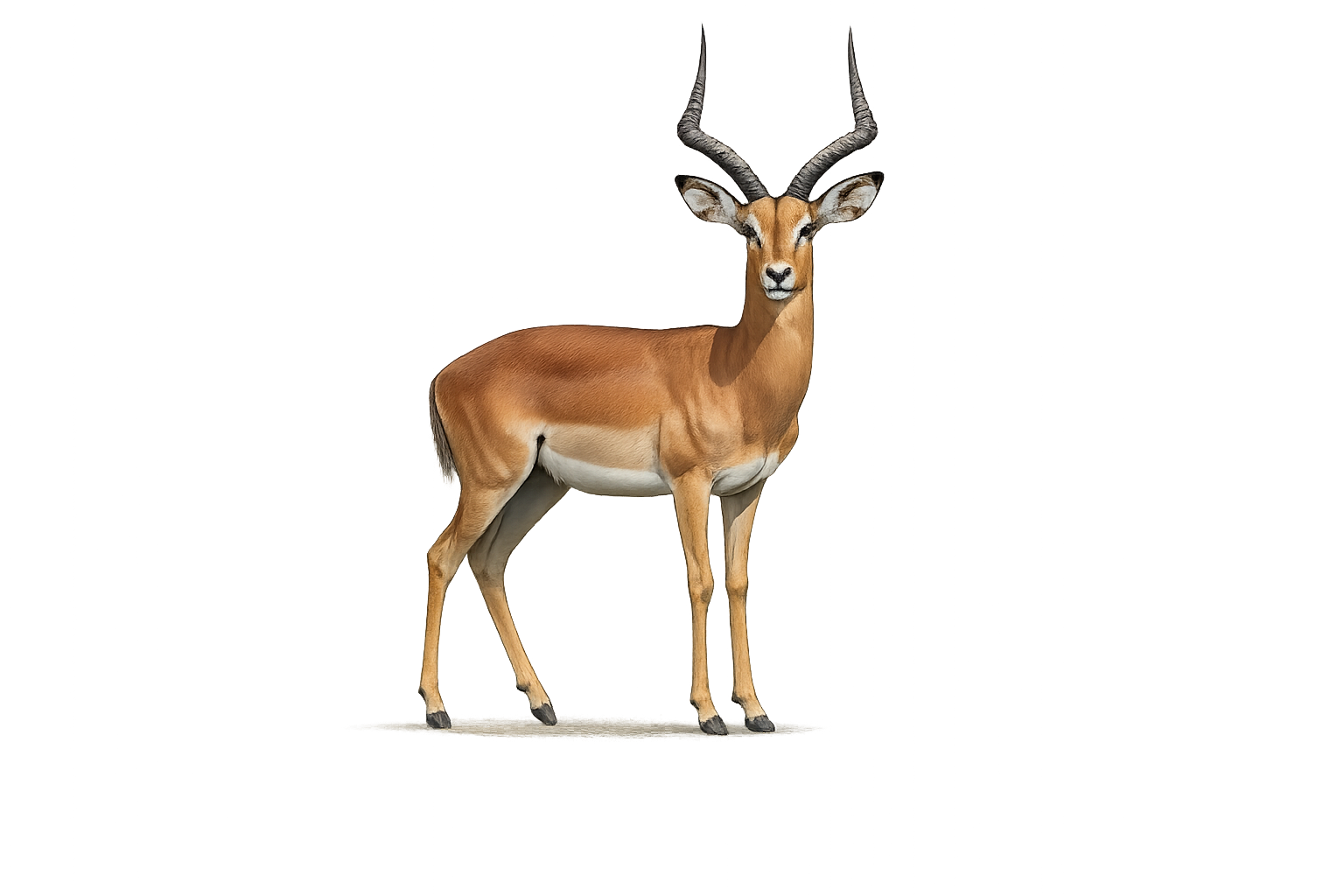
JULY 2, 2025 | IMPALA RETURN
The first reintroduced antelope species was the impala.
17 impala introduced
Approximately 27 today
The growing population is an encouraging early sign that the animals are adapting successfully to the landscape.
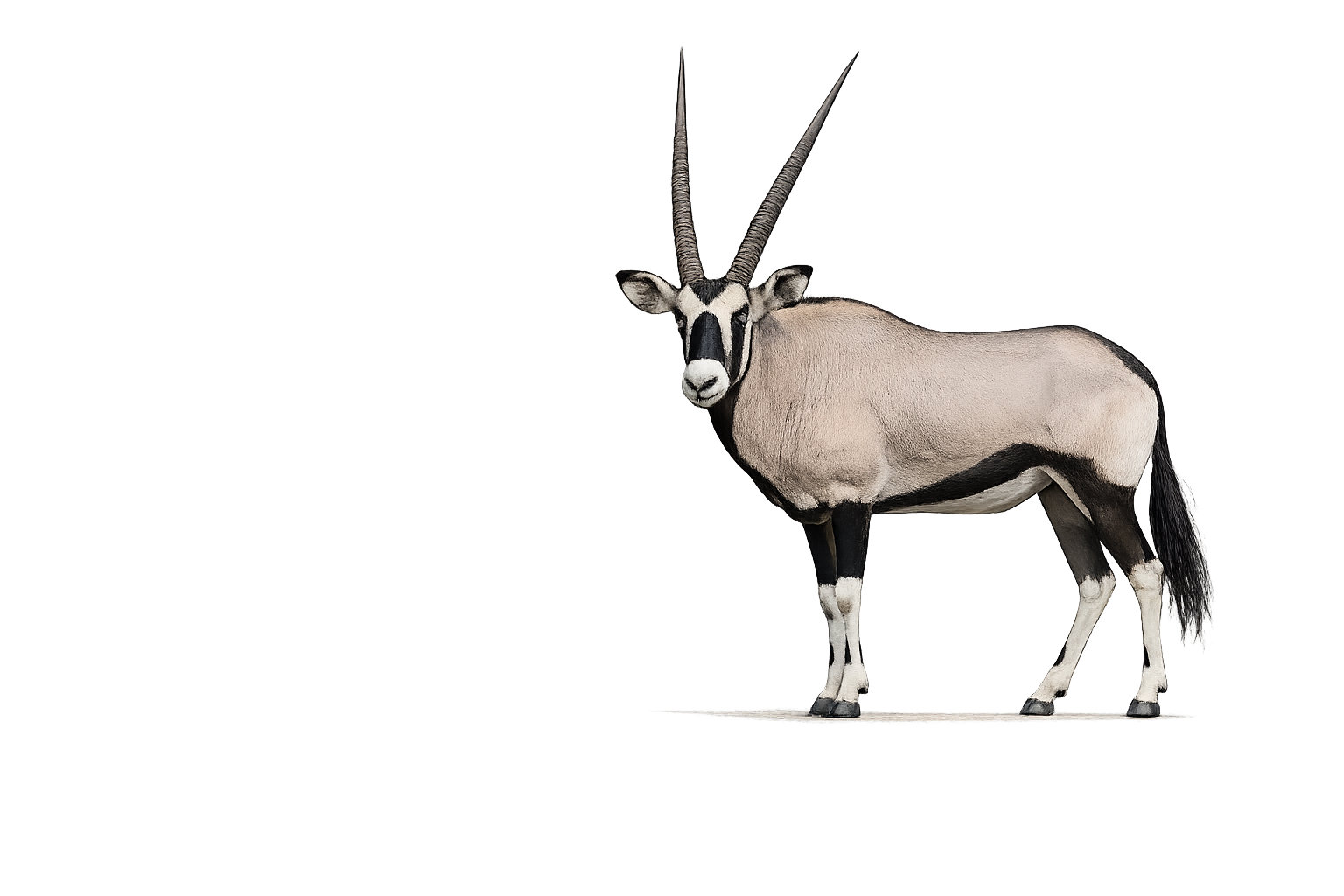
JULY 10, 2025 | GEMSBOK / ORYX RETURN
Only eight days later, Olienhout welcomed its second reintroduced species.
10 gemsbok introduced
Approximately 14 today
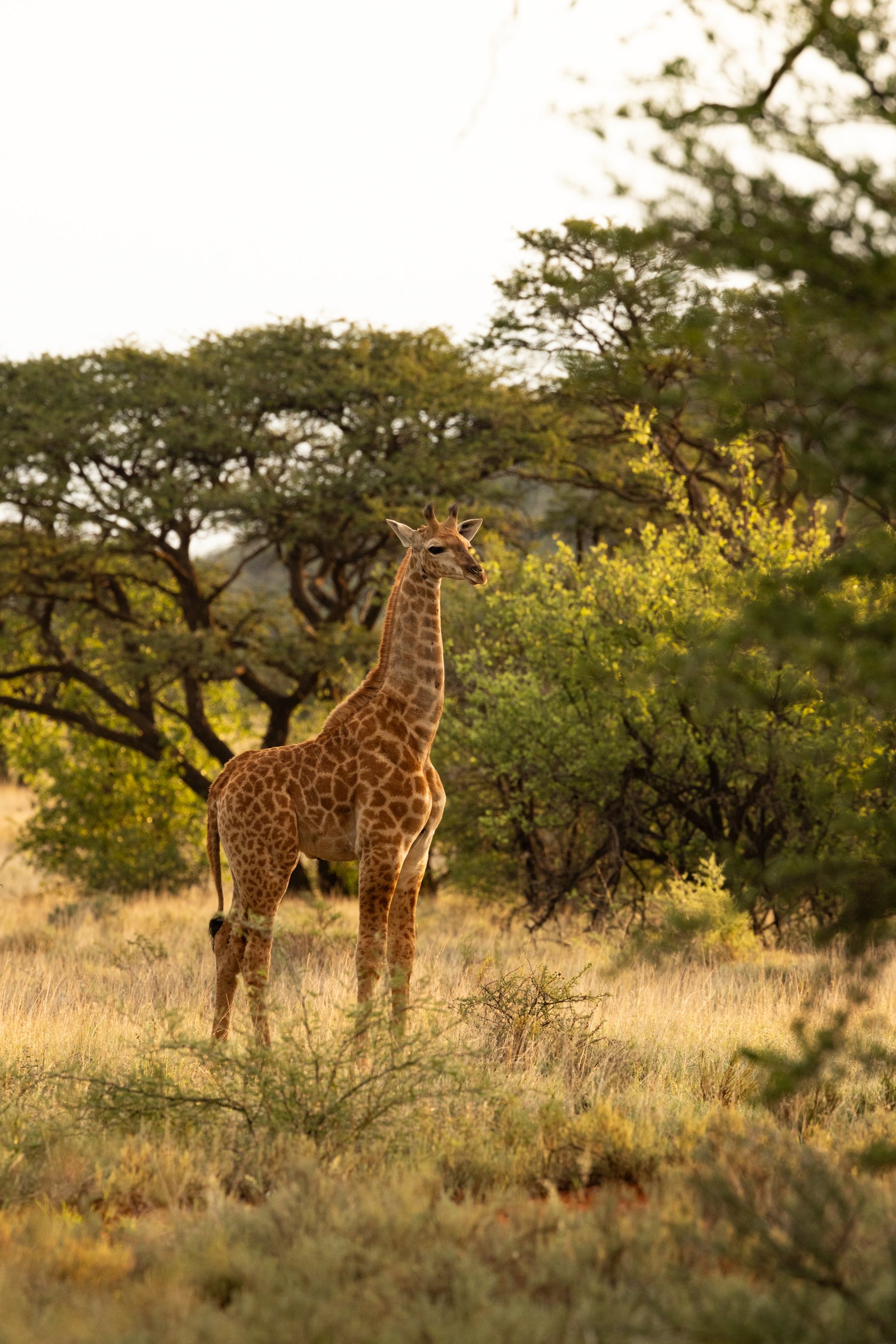
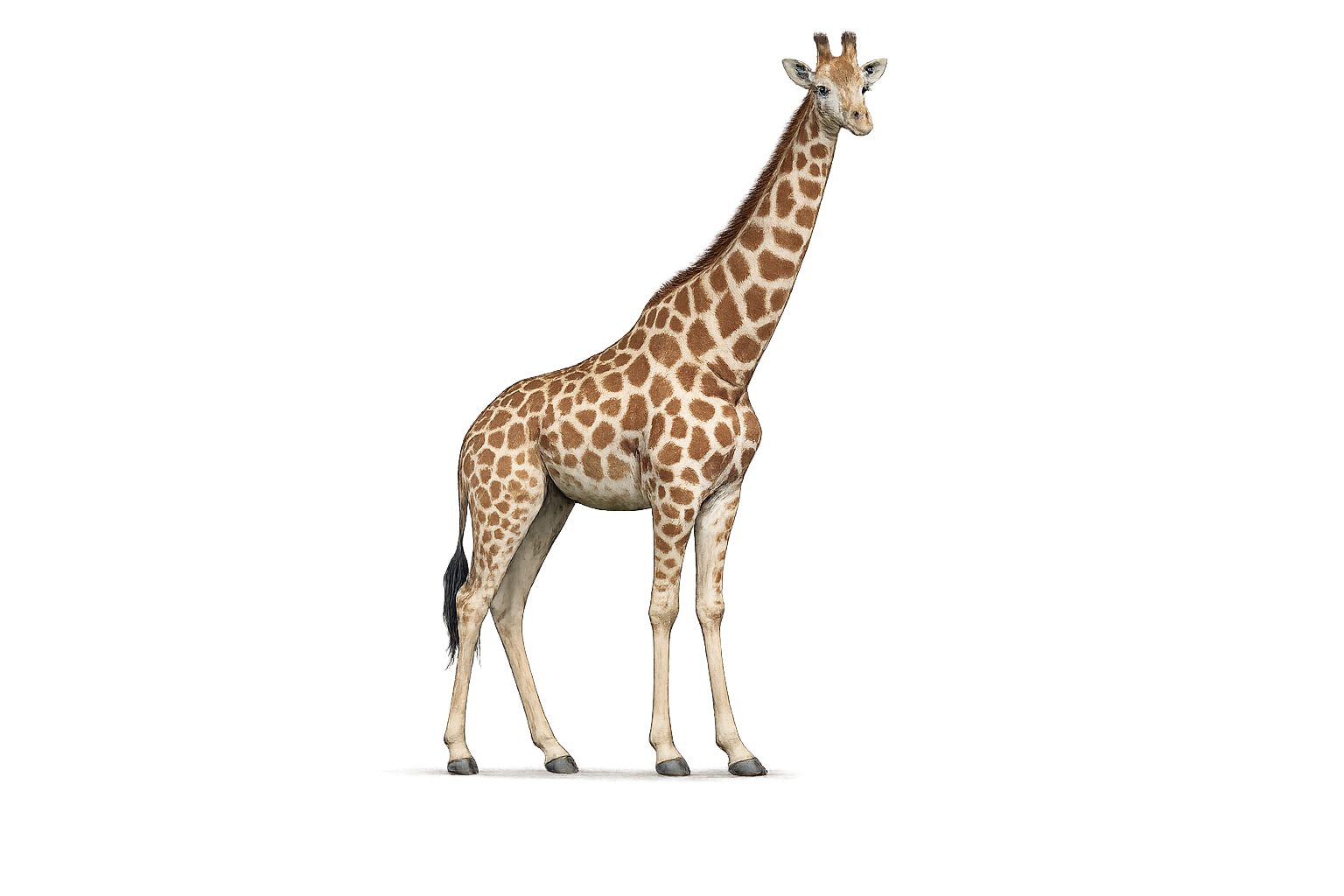
AUGUST 2025 | GIRAFFE RETURN
Three giraffes became the third species reintroduced to the reserve.
3 giraffes introduced
3 currently on the reserve
Their return marked another major step toward rebuilding the wildlife community of Olienhout.
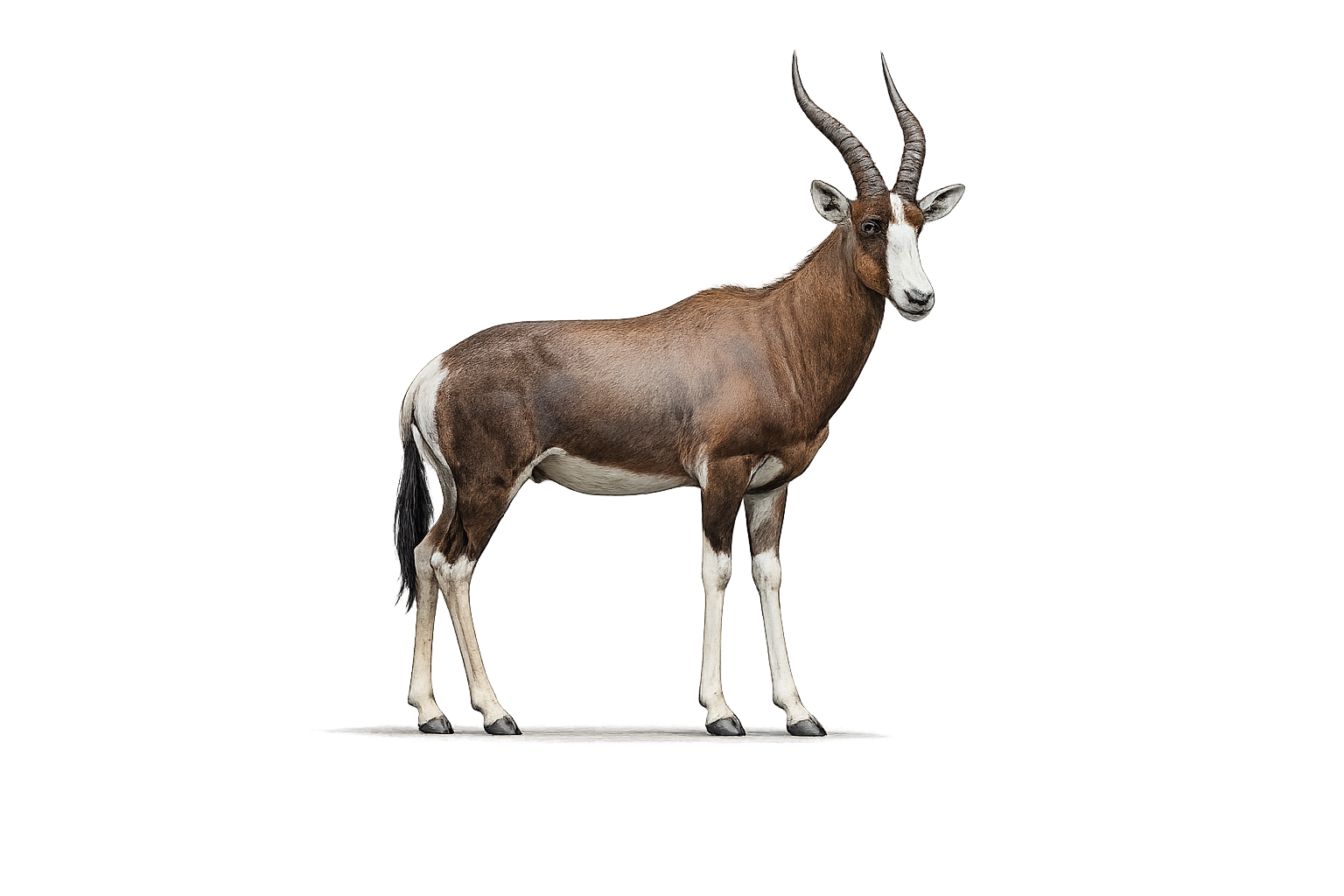
AUGUST 2025 | BLESBOK RETURN
The fourth reintroduction brought blesbok back to the landscape.
10 blesbok introduced
Approximately 16 today
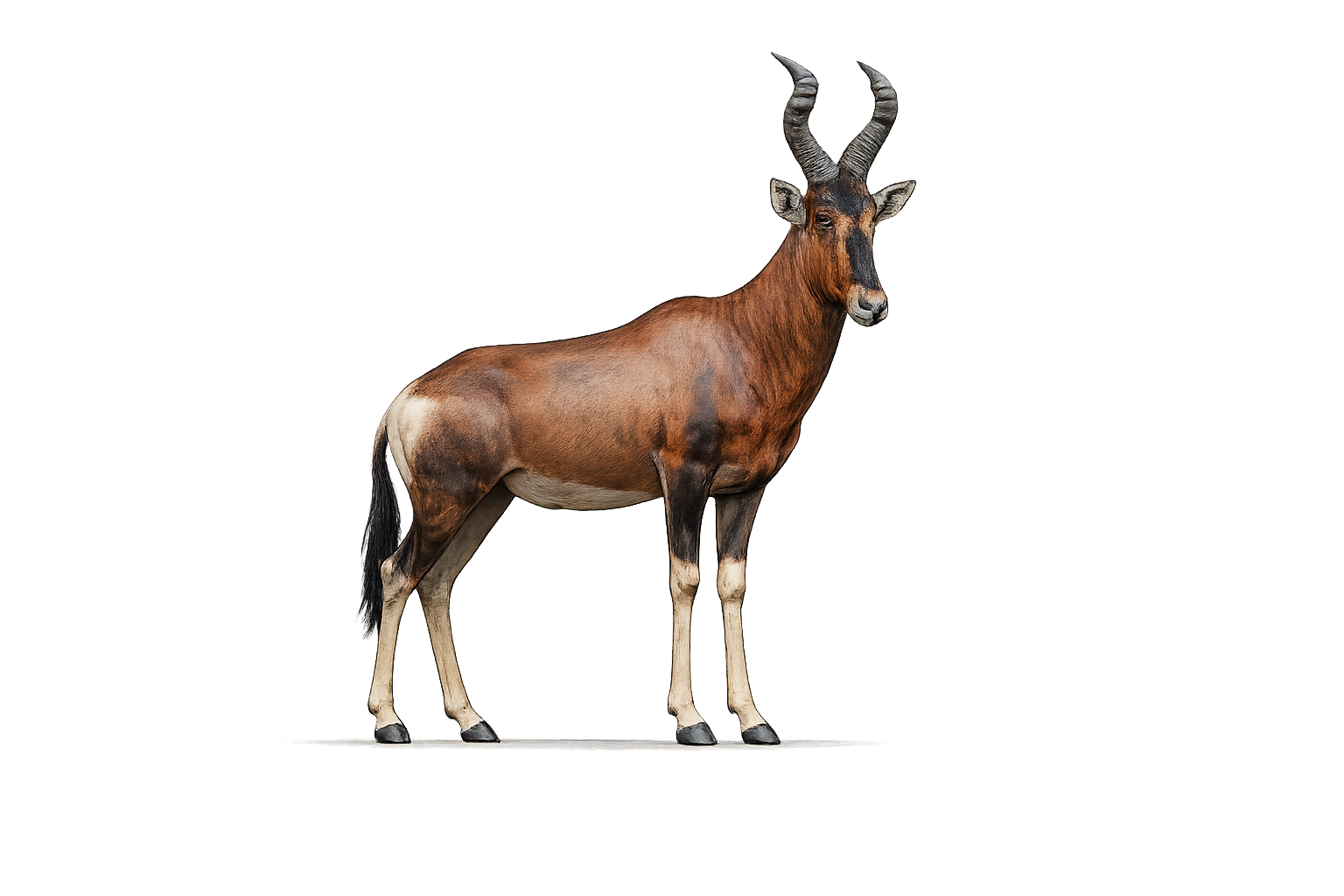
SEPTEMBER 2025 | RED HARTEBEEST RETURN
The restoration continued with the arrival of red hartebeest.
10 red hartebeest introduced
Approximately 14 today
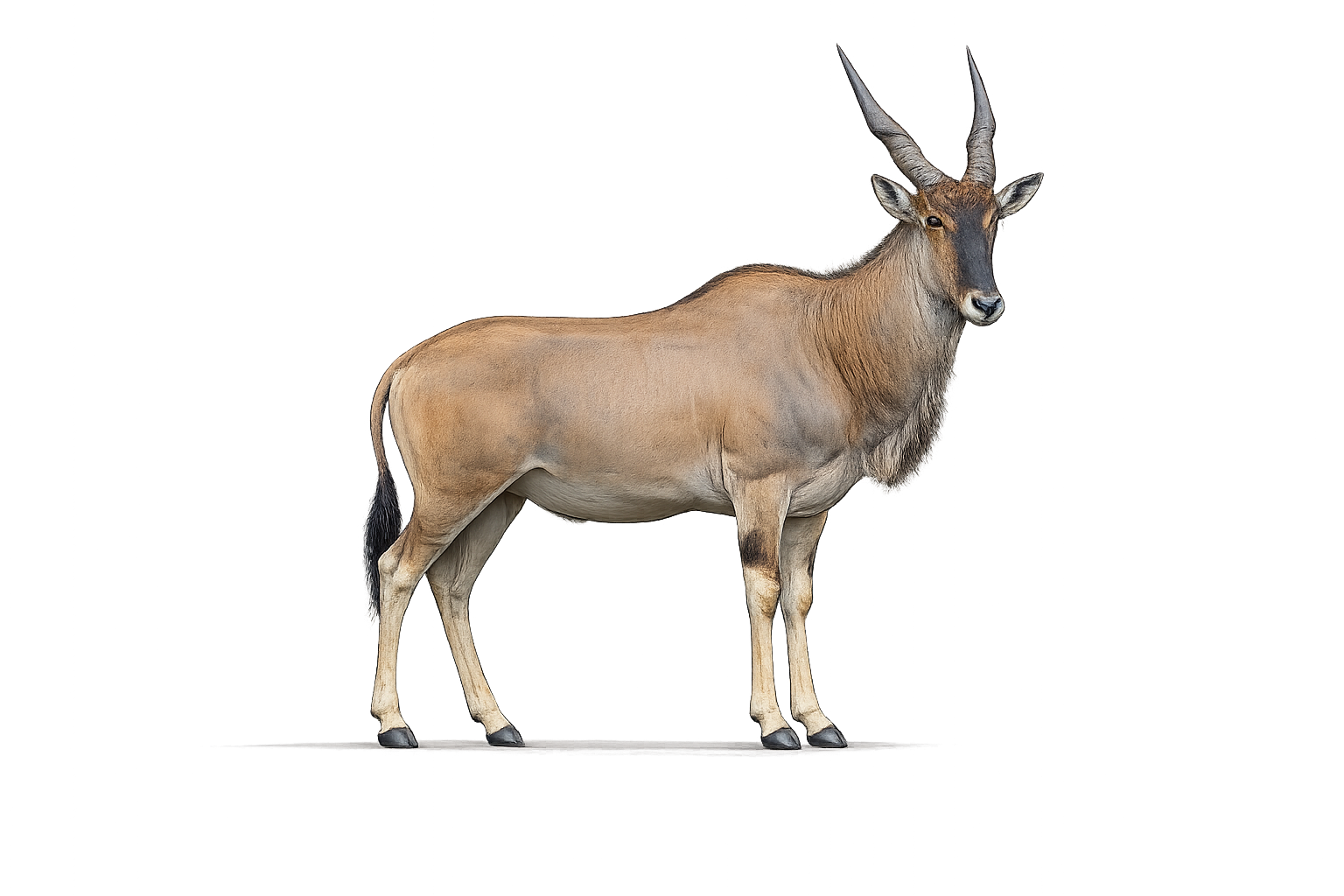
SEPTEMBER 2025 | ELAND RETURN
Eland became the sixth species deliberately returned to Olienhout.
5 eland introduced
Approximately 6 today
In only a few months, six native species had begun reclaiming a landscape that had previously been managed as cattle land.
SOME WILDLIFE NEVER LEFT
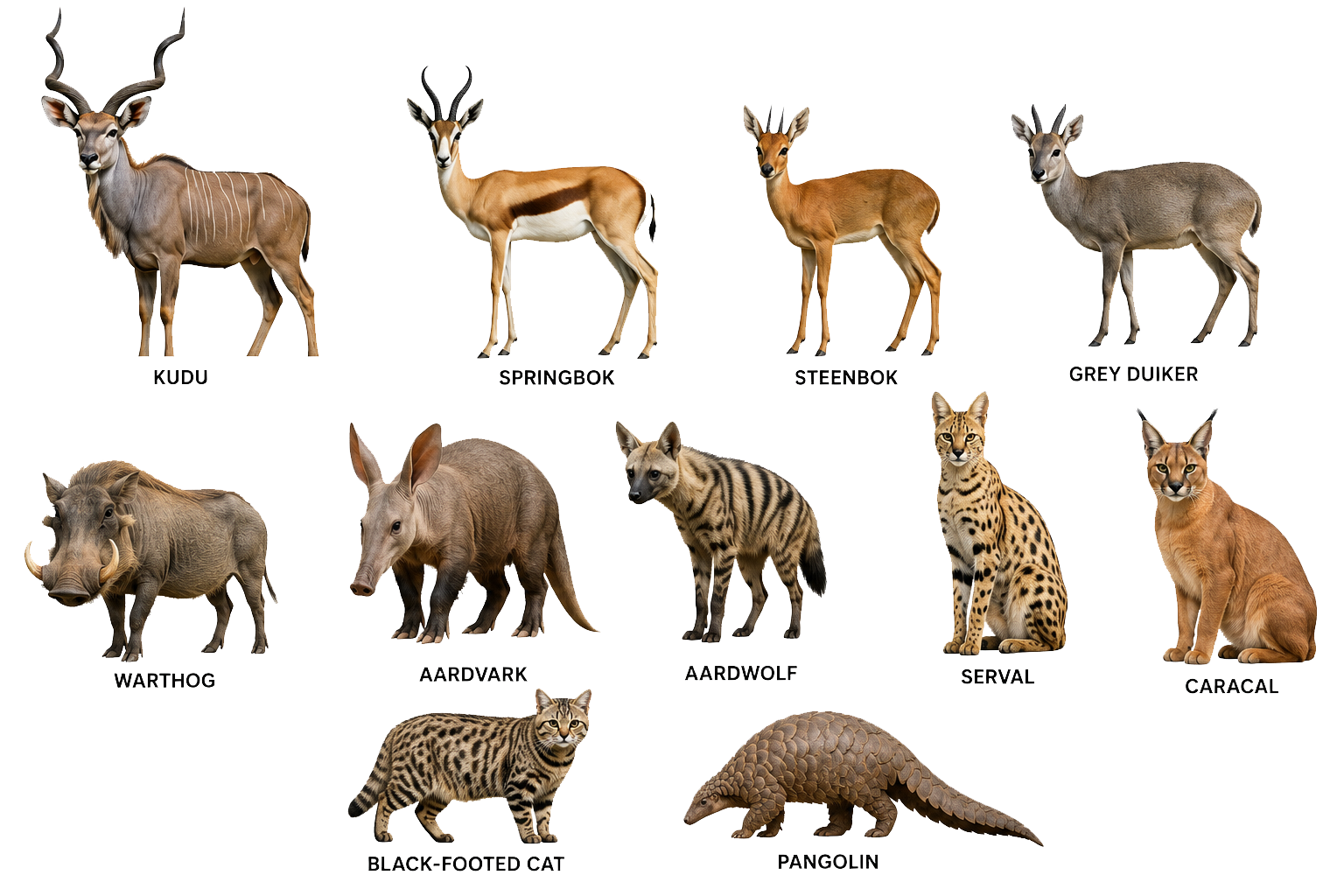
Rewilding Olienhout isn't starting from an empty landscape.
Several native species continued to occur naturally on the property without requiring reintroduction, including:
Kudu · Springbok · Steenbok · Grey Duiker · Warthog
The landscape also supports less frequently encountered and conservation-significant wildlife, including:
Aardvark · Aardwolf · Serval · Caracal · Black-footed Cat · Pangolin
Their presence is an important reminder that restoring habitat protects far more than the large, charismatic animals we most easily see.
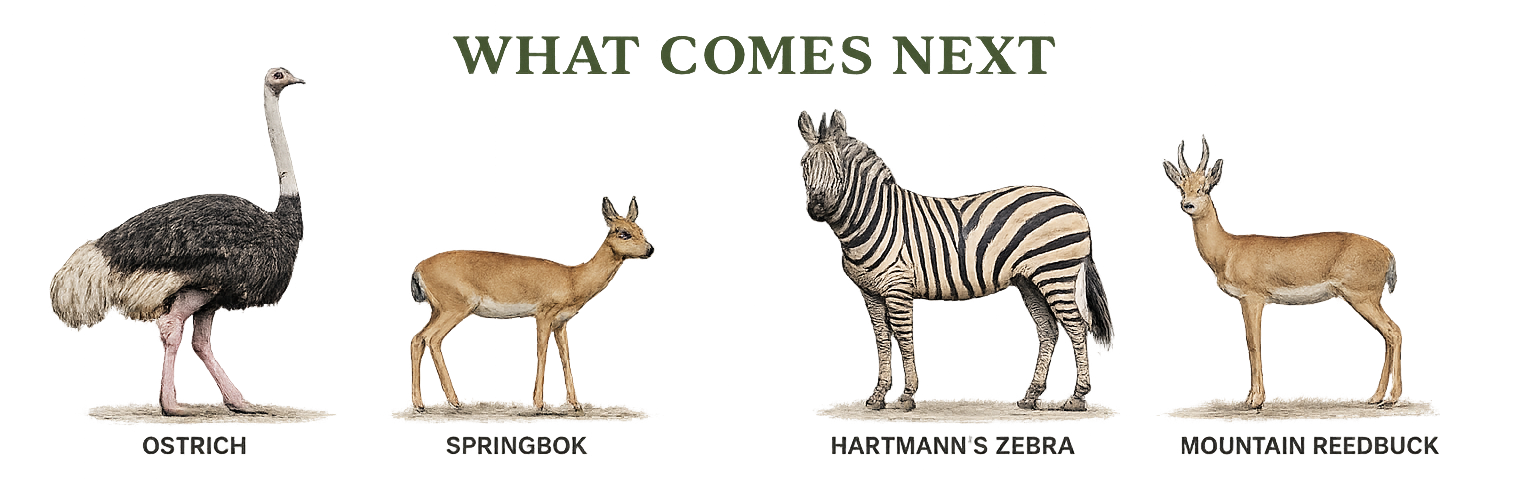
Several additional native species are being considered for future reintroduction without requiring electrification of the reserve's perimeter fence:
Ostrich
Hartmann's Zebra
Mountain Reedbuck
But the next major stage of Olienhout's rewilding story requires something much bigger.
THE RHINO CHAPTER
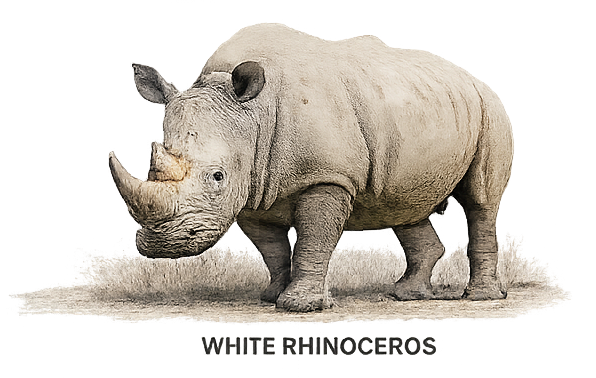
The next major chapter of Olienhout's rewilding journey is also its most ambitious yet:
the return of white rhino
Before rhino can be introduced, significant infrastructure, security, and wildlife management requirements must first be met.
ELECTRIFYING THE PERIMETER
Olienhout's approximately 16-kilometer perimeter game fence must be upgraded with electrification before rhino can be introduced.
Estimated Cost: R500,000 / approximately $30,000 USD
This is one of the largest immediate infrastructure needs standing between Olienhout and the next stage of its rewilding journey.
But the fence is only the beginning.
ANTI-POACHING + LONG-TERM SECURITY
Bringing rhino back also means accepting the responsibility of protecting them.
Olienhout will need appropriate anti-poaching capacity and ongoing security measures to protect rhino once they arrive.
This isn't a one-time expense. Protecting rhino requires a long-term commitment, and security will become an important part of the continuing cost of maintaining a rhino population on the reserve.
Cost: To Be Determined
RHINO ACQUISITION
Once the property is ready and all necessary requirements have been met, the rhino themselves must be acquired through the appropriate conservation and wildlife management channels.
The cost will depend on the animals available, conservation partnerships, permitting, and the circumstances surrounding the eventual acquisition.
Cost: To Be Determined
RHINO TRANSPORTATION + REINTRODUCTION
Moving a rhino is an extraordinary undertaking.
Specialized wildlife transportation, veterinary professionals, immobilization where required, permits, handling, and the logistics of safely moving the animal to Olienhout will all be part of the reintroduction process.
Cost: To Be Determined
THE ROAD TO RHINO
Returning white rhino to Olienhout isn't one expense or one moment.
It is a series of milestones:
Electrify the perimeter → Establish anti-poaching protection → Secure the appropriate approvals → Acquire the rhino → Transport them safely → Reintroduce them → Protect them for generations
The first major financial milestone is clear:
R500,000 / ~$30,000 USD
TO ELECTRIFY THE PERIMETER FENCE
From there, Wild Creative hopes to continue supporting Kukama as the remaining pieces come together.
Our Rhino Fund can help support the infrastructure, security, acquisition, transportation, and other conservation needs required to make the eventual return of white rhino possible.
We will continue publishing costs as they become known so our donors can see exactly what the next milestone is and what their support can help accomplish.
We're not promising that one donation brings a rhino home.
We're inviting our community to help remove the barriers, one by one, until bringing them home becomes possible.